The Ultimate Full-Stack Web Development Roadmap (2026 Edition): From Beginner to Pro
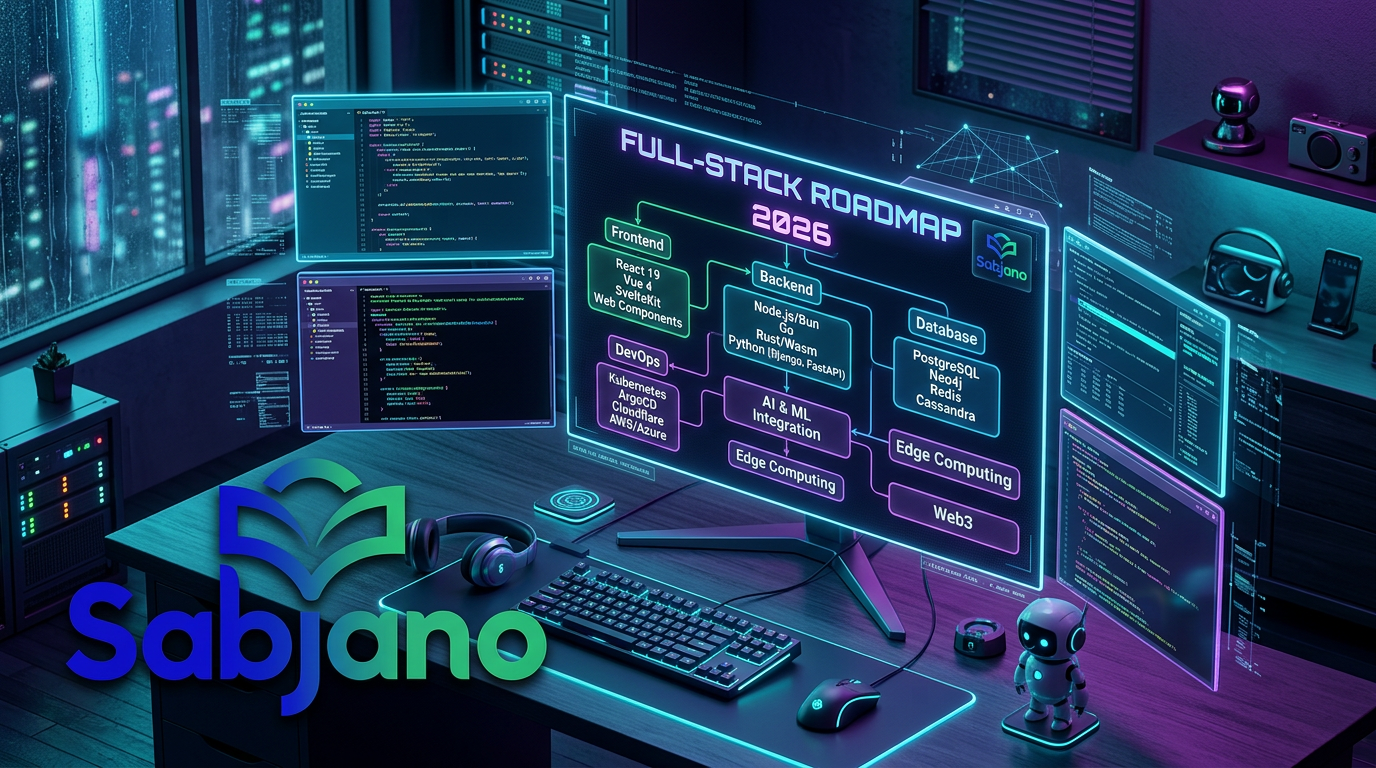
Web development continues to be one of the most dynamic, high-paying, and rapidly changing fields in the global technology industry. However, for beginners and early-career developers in 2026, entering the full-stack landscape can feel overwhelming. With dozens of languages, frameworks, deployment platforms, and AI-assisted development tools emerging every year, knowing what to learn—and in what specific order—is the key to building a successful career.
A full-stack developer is an engineer who can build both the client-side user interface (frontend) and the server-side business logic and database management (backend). In this comprehensive, step-by-step guide, we break down the complete 2026 full-stack developer roadmap, taking you from writing your first line of code to building scalable, production-ready cloud applications.
Phase 1: Core Web Fundamentals (The Foundation)
Before touching modern frameworks like React or Next.js, you must build an unshakeable foundation in the core building blocks of the web. Skipping the fundamentals to jump directly into frameworks creates weak problem-solving skills when complex bugs arise in production.
1. HTML5 (Semantic Structure)
HTML (HyperText Markup Language) forms the structural skeleton of every web page. In 2026, writing clean, semantic HTML is critical not just for browser rendering, but also for accessibility (a11y) and modern Search Engine Optimization (SEO).
- Key Topics: Semantic tags (
<header>,<nav>,<article>,<section>,<footer>), form validations, media handling, and ARIA attributes for screen readers.
2. CSS3 & Responsive Design (Styling & Layouts)
CSS (Cascading Style Sheets) controls the visual presentation of your application. Users access websites across devices ranging from 6-inch smartphones to 32-inch desktop monitors; your interfaces must adapt seamlessly.
- Key Topics: CSS Box Model, Flexbox, CSS Grid layouts, media queries for responsive design, CSS variables, and fundamental animation effects.
- Modern CSS Tooling: Once you master plain CSS, adopt utility-first frameworks like Tailwind CSS to drastically accelerate your styling workflow.
3. Modern JavaScript (ES6+)
JavaScript is the engine of modern interactive web applications. You must move beyond simple DOM manipulation and master modern ECMAScript features.
- Key Topics: Variables (
let/const), Arrow Functions, Destructuring, Spread/Rest operators, Promises,async/awaitasynchronous programming, Event Loop mechanics, and ES Modules (import/export).
Phase 2: Frontend Engineering & Modern Frameworks
Once your core foundation is solid, you transition into building reactive, component-driven user interfaces.
1. TypeScript (Type Safety at Scale)
JavaScript is dynamically typed, which can lead to unexpected runtime errors in large production apps. TypeScript adds static typing to JavaScript, catching bugs during development before code ever hits production.
- Key Topics: Basic types, Interfaces, Type Aliases, Generics, and integrating TypeScript with frontend frameworks.
2. Component-Based Frameworks (React.js)
React remains the dominant frontend library in job markets worldwide. It allows developers to break complex user interfaces into reusable, independent components.
- Key Topics: JSX syntax, Props vs. State, Component Lifecycle, React Hooks (
useState,useEffect,useContext,useMemo), and State Management tools (Redux Toolkit or Zustand).
3. Full-Stack Meta-Frameworks (Next.js)
Modern frontend applications demand fast initial load times and top-tier search engine indexing. Standard single-page React applications render client-side, which can hurt SEO. Next.js solves this by offering hybrid rendering options out of the box.
- Key Topics: Server-Side Rendering (SSR), Static Site Generation (SSG), Server Components, App Router file-based routing, and built-in API routes.
Phase 3: Backend Engineering, APIs & Security
The backend serves as the brain of your web application, handling database operations, user authentication, business rules, and third-party integrations.
1. Server Runtime (Node.js & Express.js)
Node.js enables developers to execute JavaScript on the server side, allowing full-stack engineers to write both frontend and backend logic using a single programming language.
- Key Topics: Node.js event loop, File System module, NPM/PNPM package management, Express.js middleware, routing, and error-handling controllers.
2. RESTful APIs & GraphQL Communications
Applications communicate between client and server using structured API protocols.
- Key Topics: HTTP Methods (
GET,POST,PUT,DELETE), HTTP status codes (200, 201, 400, 401, 404, 500), JSON payload design, CORS policy management, and introduction to GraphQL queries and schemas.
3. Authentication & Security Best Practices
Security must be integrated from day one. You must know how to protect user identities and prevent unauthorized data access.
- Key Topics: Password hashing using
bcrypt, JSON Web Tokens (JWT) for stateless sessions, OAuth2 login flows (Google/GitHub single-sign-on), environment variables management (.env), CORS setup, and preventing SQL Injection / XSS attacks.
Phase 4: Database Architecture & Management
Data is the heart of almost every commercial application. Full-stack developers must know how to design efficient schemas, write optimized queries, and manage data persistence.
1. Relational Databases (SQL)
Relational databases organize structured data into interconnected tables using primary and foreign keys.
- Key Tooling: PostgreSQL or MySQL.
- Key Concepts: SQL CRUD operations, complex
JOINqueries, table indexing for performance, schema migrations, and Object-Relational Mappers (ORMs like Prisma or Drizzle).
2. Non-Relational Databases (NoSQL)
NoSQL databases store unstructured or semi-structured data as flexible JSON-like documents.
- Key Tooling: MongoDB.
- Key Concepts: Collections, document structures, aggregation pipelines, and Object Data Modeling (ODM via Mongoose).
Technology Stack Comparison Matrix
| Stack Layer | Primary Technology | Recommended Alternative | Industry Use Case |
|---|---|---|---|
| Frontend | React.js + Tailwind CSS | Vue.js + Bootstrap | Dynamic interactive dashboards |
| Meta-Framework | Next.js (SSR/SSG) | Nuxt.js / Remix | E-commerce, blogs, public portals |
| Backend | Node.js + Express | Python (FastAPI / Django) | Microservices & serverless APIs |
| Database | PostgreSQL (Relational) | MongoDB (Document) | Enterprise financial vs flexible data |
| Deployment | Vercel / Render | AWS / Docker Containers | Rapid hosting vs custom infrastructure |
Phase 5: DevOps, Deployment & CI/CD
Writing code on your local computer is only half the journey. Getting your application live on the web with automated testing and high availability completes the full-stack discipline.
1. Version Control (Git & GitHub)
Git is the industry-standard version control system that enables team collaboration and tracks code history.
- Key Workflow: Branching strategies (
main,feature-branch), merging, resolving merge conflicts, pulling requests (PRs), and code reviews.
2. Containerization (Docker)
Docker packages your code, dependencies, and environment variables into isolated containers, eliminating the "it works on my machine" deployment issue.
3. Cloud Hosting & Automated Pipelines
- Frontend/Full-Stack Hosting: Vercel or Netlify for instant Next.js deployments.
- Backend & DB Hosting: Render, Railway, or AWS EC2 / RDS.
- CI/CD Automation: Setting up GitHub Actions to automatically run unit tests and trigger cloud builds whenever code is pushed.
4 Rules to Succeed as a Developer in 2026
- Build Real Projects, Don't Just Watch Tutorials: Avoid tutorial hell. After learning a concept, immediately build a practical application (e.g., an e-commerce store, a task board, or a finance tracker).
- Master AI Tooling as an Accelerator: Use AI tools (like GitHub Copilot or LLMs) to write boilerplate code, debug errors, and explain complex concepts, but ensure you understand every line of code generated.
- Write Clean, Documented Code: Code is read far more often than it is written. Practice clear naming conventions and keep functions modular.
- Learn How to Read Official Documentation: Frameworks update rapidly. Relying on official documentation ensures your knowledge remains current.
Final Thoughts
Becoming a full-stack developer is a marathon, not a sprint. You don't need to master every single technology listed in this roadmap on day one. Focus on mastering Phase 1 and Phase 2 thoroughly, build 2-3 complete projects, and then layer on backend engineering and deployment skills step by step. Consistency over time will make you an exceptional engineer.
Comments (0)
No comments yet. Share your thoughts below!