Top AI & Automation Skills Every Professional Needs in 2026
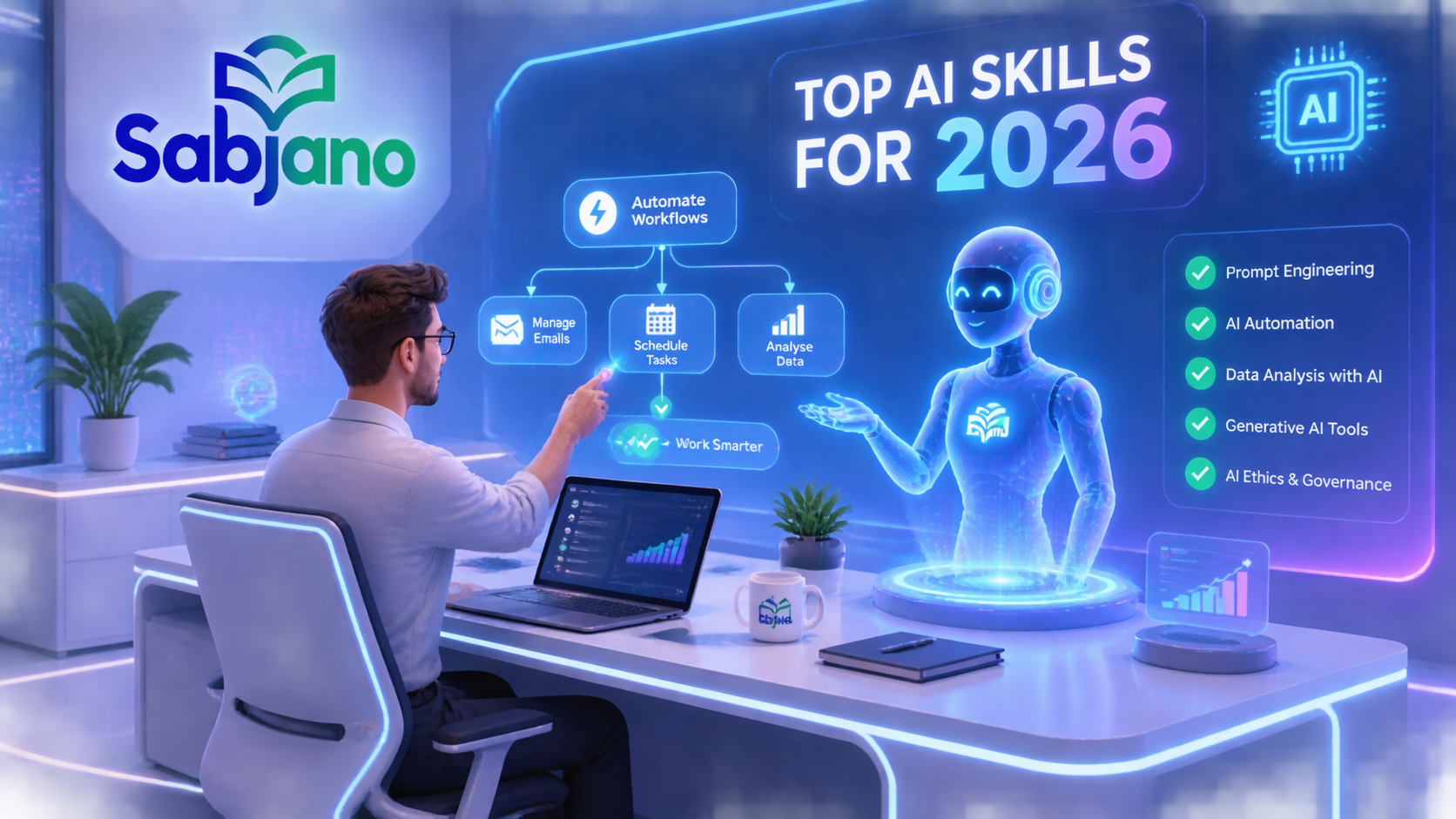
The integration of Artificial Intelligence (AI) and automated workflows has reshaped the global job market faster than any technological revolution in history. AI is no longer restricted to research labs or software engineering departments; it has transformed marketing, finance, human resources, project management, and creative design.
In 2026, the question is no longer whether AI will replace human workers. Rather, professionals who effectively leverage AI tools will outperform and replace those who do not. To stay competitive and futureproof your career, mastering specific AI-driven competencies is mandatory. In this comprehensive guide, we explore the essential AI and automation skills every professional needs today.
1. Advanced Prompt Engineering & Context Framing
Prompt engineering is the art and science of communicating effectively with large language models (LLMs) and generative AI systems to produce precise, high-quality outputs.
Basic prompts yield generic, low-value responses. High-performing professionals know how to structure prompts using advanced frameworks:
- Role Assignment: Instructing the AI to act as a specific persona (e.g., "Act as a Senior Financial Analyst").
- Context Provision: Giving detailed background data, target audience parameters, and constraints before asking for output.
- Few-Shot Prompting: Providing 2–3 concrete examples of desired output formats within the prompt itself.
- Iterative Refinement: Systematically tweaking parameters to eliminate hallucinations and refine tone.
2. No-Code Workflow Automation
Automating repetitive manual tasks frees up valuable cognitive bandwidth for high-level strategy and creative problem-solving. No-code automation tools allow non-technical professionals to build complex data pipelines without writing a single line of traditional code.
Core Automation Capabilities to Master:
- Trigger-Action Workflows: Connecting workplace apps (e.g., automatically routing incoming lead emails to a CRM database and triggering a Slack notification).
- AI-Driven Data Extraction: Extracting key insights from unstructured PDFs, invoices, and survey responses automatically.
- Automated Content Distribution: Setting up cross-platform social and email marketing sequences that adapt dynamically based on user engagement.
3. Data Literacy & AI-Assisted Analytics
Data is the raw fuel powering modern decision-making. However, analyzing massive spreadsheets manually is inefficient. Modern professionals must know how to combine basic statistical understanding with AI data analysis tools.
- Exploratory Data Analysis: Using AI to instantly summarize raw CSV datasets, identify trends, detect anomalies, and generate visual charts.
- Predictive Modeling Literacy: Understanding how machine learning models generate forecasts so you can interpret AI recommendations critically rather than blindly accepting them.
Essential AI Skill Matrix for 2026
| Skill Domain | Key Tools to Learn | Primary Career Impact | Skill Level Required |
|---|---|---|---|
| Prompt Engineering | Advanced LLM Interfaces | 3x faster content & strategy drafting | Foundational |
| Workflow Automation | Zapier, Make, n8n | Eliminates 10+ hours of routine manual tasks | Intermediate |
| AI Data Analytics | Code Interpreter, PowerBI AI | Instant dataset visualization & business insights | Intermediate |
| Generative Visuals | Midjourney, Canva AI | Rapid marketing graphics & slide decks | Foundational |
4. Critical Thinking & Ethical Verification
While generative AI tools can produce drafts rapidly, they frequently suffer from "hallucinations"—generating confident yet entirely inaccurate facts, code bugs, or false statistical claims.
The ultimate competitive advantage for human professionals lies in judgment and verification:
- Fact-Checking Rigor: Verifying AI-generated data against authoritative primary sources.
- Bias Awareness: Recognizing inherent biases in AI training datasets and adjusting outputs for fairness and inclusivity.
- Ethical Compliance: Ensuring sensitive customer data, corporate secrets, or personal identifiable information (PII) are never uploaded into public AI models without proper security protocols.
5. Strategic Human-AI Collaboration Mindset
Succeeding in an automated workplace requires shifting your mindset from seeing AI as a threat to viewing it as a powerful, tireless digital intern.
- Delegate Routine Execution: Use AI for initial brainstorming, summarization, first-draft writing, and basic administrative organization.
- Focus on High-Value Human Strengths: Double down on empathy, negotiation, team leadership, complex negotiation, and creative vision—qualities AI cannot replicate.
- Commit to Continuous Micro-Learning: AI tooling evolves weekly. Dedicate 20 minutes every day to exploring new feature releases and workflow updates in your domain.
Final Thoughts
Futureproofing your career in 2026 doesn't require you to quit your job and earn a computer science degree. By building strong foundations in prompt engineering, mastering no-code automation platforms, and applying critical human judgment to AI outputs, you position yourself as an indispensable asset in any modern organization.
Comments (0)
No comments yet. Share your thoughts below!