API Security & Rate Limiting in 2026: How to Protect Your Backend From Bots and Surprise Cloud Bills
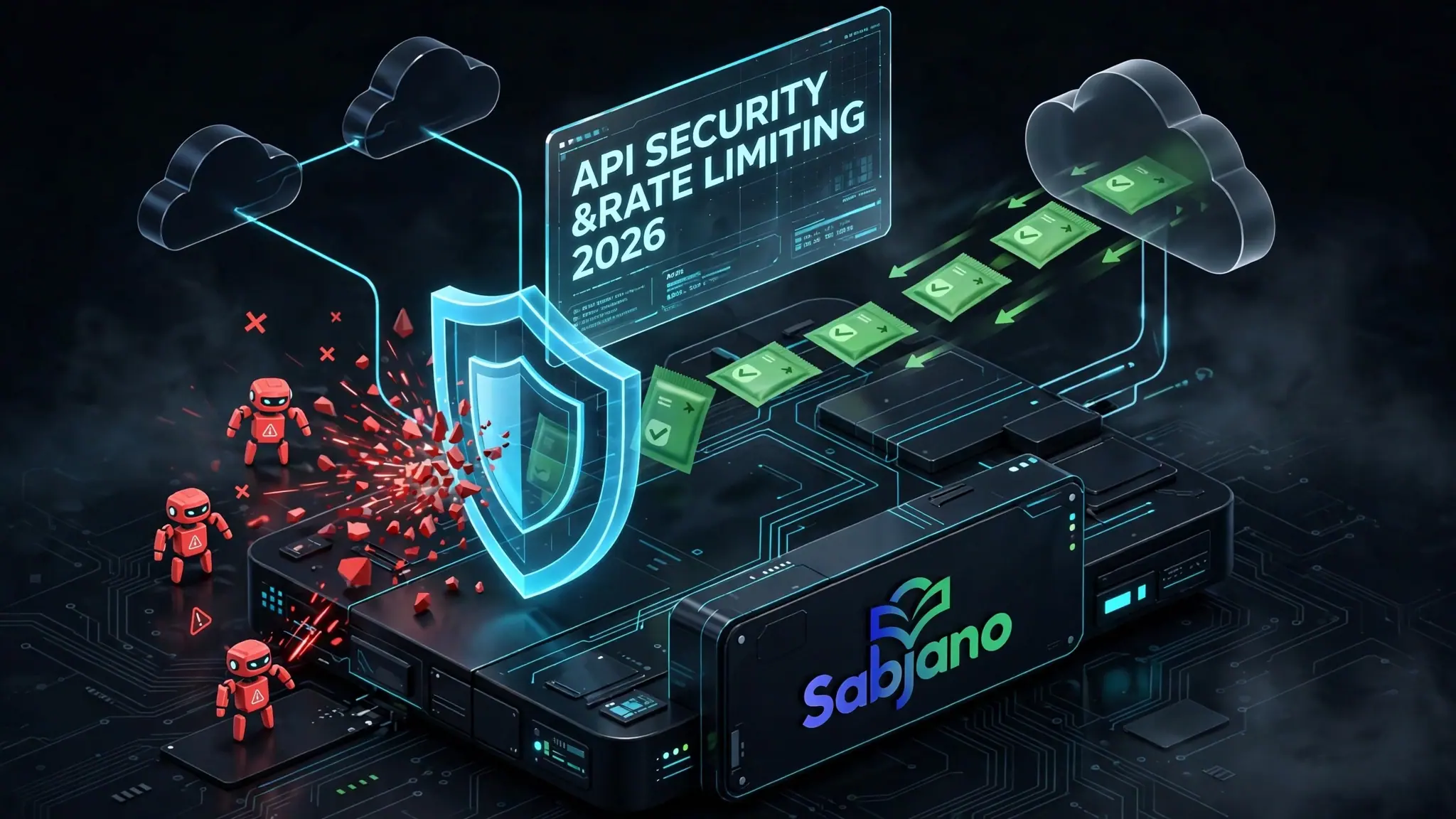
Waking up at 3:00 AM to an automated alert telling you that your cloud database CPU has hit 100%—and your pay-as-you-go SMS or AI API bill just jumped by ₹45,000 in forty minutes—is a rite of passage nobody wants to experience. In most cases, your application hasn't suddenly gone viral overnight; instead, an automated bot script found an unprotected public endpoint (like /api/send-otp or /api/search) and hammered it ten thousand times per minute.
Modern web and mobile applications rely heavily on REST and GraphQL APIs to connect frontends, payment gateways, and third-party integrations. Yet while developers spend weeks perfecting UI animations, API endpoints are often shipped with weak authentication checks and zero traffic throttling.
Securing your backend doesn't require an enterprise cybersecurity department. Implementing a handful of proven defensive layers—starting with smart rate limiting, strict object-level authorization, and webhook verification—will block 99% of automated abuse while keeping legitimate users unaffected. Here is a practical guide to locking down your APIs in 2026.
1. Implementing Smart Rate Limiting (Your First Line of Defense)
Rate limiting controls how many requests a single user, IP address, or API key can make within a specific time window. Without it, a single scraper can download your entire product catalog in seconds, or a credential-stuffing bot can test thousands of stolen passwords against your /login route.
Choosing the Right Rate Limiting Algorithm
| Algorithm | How It Works | Memory Cost | Best Practical Use Case |
|---|---|---|---|
| Fixed Window Counter | Counts requests inside rigid blocks (e.g., 100 reqs per clock minute) | Very Low | Simple internal APIs where minor boundary bursts are fine |
| Sliding Window Log | Tracks exact timestamps of recent requests for smooth enforcement | High | High-security endpoints like /login, /reset-password, /otp |
| Token Bucket | Refills tokens steadily; allows short legitimate bursts up to bucket cap | Low (Redis) | Public REST APIs & mobile apps with bursty user behavior |
Apply Tiered Limits Instead of One Global Rule
Never apply the exact same rate limit across your entire backend. Group your routes by risk level:
- Strict Auth & Costly Endpoints (
/login,/send-otp,/generate-ai): Cap at 5 requests per minute per IP and per account identifier, returning an HTTP429 Too Many Requestsstatus along with aRetry-Afterheader. - Standard Read Endpoints (
/api/articles,/api/products): Allow 100 to 200 requests per minute per IP so normal browsing and search filtering feel instantaneous. - Authenticated Write Endpoints (
/api/orders,/api/comments): Tie limits to the authenticateduser_idrather than IP address alone—otherwise, fifty legitimate users sharing a college or office Wi-Fi router will accidentally block each other.
2. Fixing the #1 API Vulnerability: BOLA / IDOR
Year after year, Broken Object Level Authorization (BOLA)—also known as IDOR (Insecure Direct Object Reference)—tops the OWASP API Security Top 10 list.
Here is how easily it happens: a logged-in user fetches their invoice using GET /api/invoices/1045. Out of curiosity, they change the URL number to GET /api/invoices/1046. If your backend checks only whether the user is logged in—without verifying whether Invoice 1046 actually belongs to that specific user—you have just leaked another customer's private financial data.
Two Simple Fixes to Eliminate IDOR Permanently:
- Always Scope Queries by Authenticated User ID: Never run
Invoice::find($id)alone. Always enforce ownership directly inside your database query:Invoice::where('id', $id)->where('user_id', $authUser->id)->firstOrFail(). - Use UUIDs Instead of Sequential Auto-Increment IDs: Exposing sequential integers (
/users/1,/users/2,/users/3) makes it trivial for attackers to enumerate every record in your database. Use non-guessable UUIDv4 or ULIDs in public API URLs while keeping integer primary keys strictly for internal database joins.
3. Hardening JWT Authentication and Session Tokens
JSON Web Tokens (JWTs) are standard across modern single-page apps and mobile backends, but common implementation shortcuts create serious security holes:
- Keep Access Tokens Short-Lived: Set access token expiration (
exp) to 15 minutes rather than 30 days. Pair them with a secure,HttpOnlyrotating Refresh Token stored in a cookie so stolen tokens expire quickly and cannot be read by malicious JavaScript (XSS). - Never Store Sensitive Data Inside the JWT Payload: A standard JWT payload is simply Base64-encoded, not encrypted—anyone who intercepts the token can decode and read it in two seconds. Store only non-sensitive identifiers like
user_idandrole. - Validate Algorithm and Issuer Strictly: Explicitly enforce the expected signing algorithm (such as
RS256orHS256) on your server so attackers cannot bypass signature checks using legacyalg: noneheader tricks.
4. Verifying Incoming Payment & Third-Party Webhooks
If your backend accepts webhooks from payment gateways (like Razorpay, Stripe, or Cashfree) or messaging APIs, remember that your webhook URL is a public POST endpoint. Without signature verification, an attacker could send a fake JSON payload claiming "status": "payment_captured" and trick your system into unlocking paid services for free.
Essential Webhook Security Checklist:
- Verify Cryptographic HMAC Signatures: Every legitimate provider signs incoming webhook payloads using a shared secret key in the HTTP headers (e.g.,
X-Razorpay-Signature). Compute the HMAC-SHA256 hash on your server using a constant-time comparison function before processing the payload. - Implement Idempotency Keys: Payment providers occasionally retry the same webhook twice during network hiccups. Store processed
event_idvalues in Redis or your database so duplicate deliveries are safely ignored instead of crediting a user's wallet twice.
5. Never Leak Stack Traces or Overshare JSON Fields
In production (APP_ENV=production), turn off detailed debug error responses immediately. Returning raw SQL error messages or file paths gives attackers a free blueprint of your database schema and framework version. Return clean, generic messages ("Invalid request parameters") to the client while logging full stack traces securely on your server.
Similarly, avoid dumping raw database model objects directly into JSON responses (return response()->json($user)), which often exposes hidden columns like passwordresettoken, is_admin, or internal flags. Use explicit API Resource Transformers / DTOs to whitelist only the exact fields the frontend needs.
Locking Down Your Endpoints Before Your Next Deploy
Strong API security isn't built overnight—it comes from layering small, practical guardrails across every route you ship. Start this week by putting Redis-backed rate limits on your authentication and OTP endpoints, auditing your detail routes for IDOR ownership checks, replacing sequential public IDs with UUIDs, and locking down your production error responses. Those four changes alone will protect both your users' data and your monthly cloud budget.
Comments (0)
No comments yet. Share your thoughts below!