Mastering Job Interviews in 2026: How to Stand Out Beyond Generic Answers
Let’s be honest about what happens in most job interviews today. A hiring manager asks a classic question like, "Tell me about a time you handled a difficult conflict on a project," or "Walk me through how you would design this system." Within seconds, the candidate starts reciting a stiff, memorized script that sounds like it came straight out of an interview prep textbook.
Here is the reality from the other side of the table: interviewers talk to dozens of candidates every week. They can spot a rehearsed, generic answer within ten seconds—and the moment they hear one, they mentally check out.
In 2026, companies aren't just hiring people who can recite textbook definitions or memorize algorithmic tricks. With AI tools handling basic boilerplate tasks, employers are desperately looking for professionals who can think clearly under pressure, communicate trade-offs honestly, and take genuine ownership of problems. Here is a practical, grounded guide to standing out in both technical and behavioral interviews without sounding like a robot.
1. Rethinking the "Tell Me About Yourself" Opener
Almost every interview begins with some variation of "Walk me through your background." Most candidates waste this golden two-minute window by reading their resume chronologically from college graduation to their current role.
Instead, treat this question like a 60-second movie trailer structured around three clear beats:
- Who You Are & Your Core Strength: Summarize your current role and the specific domain problems you solve best.
- One Concrete Proof Point: Highlight a measurable project, optimization, or milestone you recently delivered (use real numbers whenever possible).
- Why This Specific Role Excites You: Connect your past trajectory directly to the challenges this company is currently solving.
Keep it under 90 seconds, speak naturally, and end with a conversational hook that invites the interviewer to ask follow-up questions about your best work.
2. Upgrading the STAR Method to STAR-L for Behavioral Rounds
You have probably heard of the STAR method (Situation, Task, Action, Result) for answering behavioral questions. While it prevents rambling, most candidates forget the most important piece that senior hiring managers actually care about: Learning (STAR-L).
How to Structure a Memorable Story:
- Situation (15% of your time): Set the context quickly in two sentences. Don't get bogged down in minor backstory details.
- Task (10%): State clearly what your specific responsibility or goal was.
- Action (45%): Focus strictly on what you did—use "I" instead of "We." Explain the options you considered and why you chose a specific path over alternatives.
- Result (15%): Share the measurable outcome (e.g., "Reduced customer onboarding drop-off by 22%" or "Cut server response time from 900ms down to 180ms").
- Learning (15%): Conclude with what that experience taught you and how you applied that lesson to future projects. Admitting a minor mistake you corrected shows massive maturity.
Generic Candidate vs. Standout Candidate Comparison
| Interview Moment | What Average Candidates Do | What Standout Candidates Do |
|---|---|---|
| Technical Problem | Jumps straight into coding or answering silently | Clarifies edge cases, constraints, and thinks out loud |
| Unknown Concept | Guesses wildly or tries to bluff through it | Admits the gap honestly and explains how they'd find the answer |
| Past Failure Question | Gives a fake weakness ("I work too hard") | Shares a real setback, ownership taken, and process fixed |
| End of Interview | Says "No, I think you covered everything" | Asks sharp questions about team bottlenecks & 90-day goals |
3. How to Nail Technical & Case-Study Rounds Without Panicking
Whether you are solving a live coding challenge, debugging an architecture diagram, or analyzing a business case study, remember one core secret: the interviewer is grading your thought process, not just your final answer.
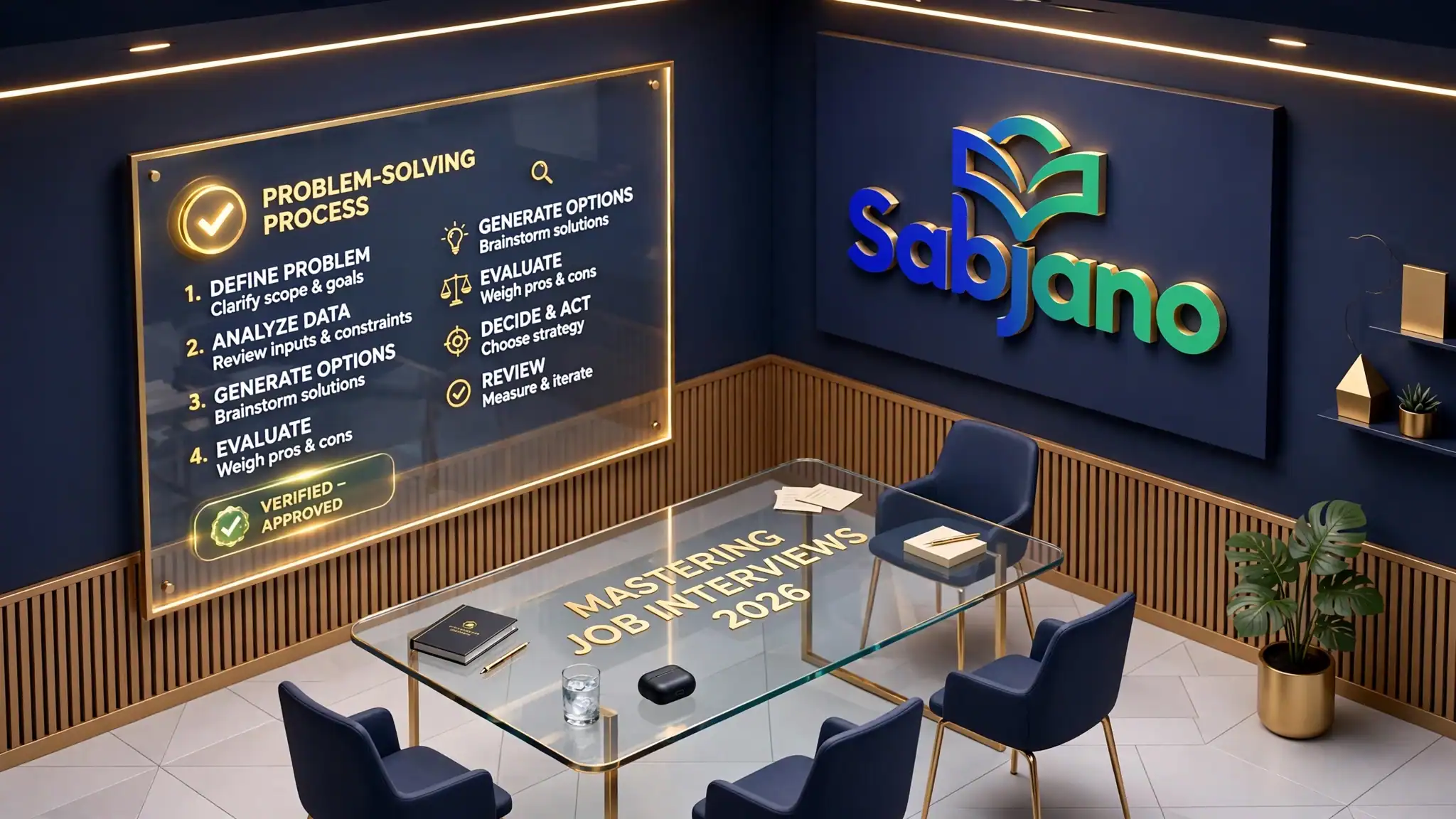
Follow the 4-Step Problem-Solving Loop:
- Pause and Clarify Requirements: Never rush into a solution in the first ten seconds. Ask 2–3 smart clarifying questions about scale, edge cases, budget, or user constraints. This immediately separates senior thinkers from junior rushers.
- Think Out Loud Continuously: Silence makes an interviewer assume you are stuck. Narrate your reasoning: "I'm considering Approach A because it's simpler to implement, though Approach B handles higher traffic better. Let's start with A and optimize if needed."
- Discuss Trade-Offs Openly: In real-world engineering and business, there is rarely one "perfect" solution—only trade-offs between speed, cost, complexity, and maintainability. Mentioning the downsides of your own solution proves deep practical experience.
- Test Your Own Work Before Saying "I'm Done": Walk through your code or proposal with a sample input or edge case before the interviewer points out a bug. Catching your own mistake turns a potential negative into a huge positive.
4. Handling Questions You Don't Know the Answer To
Sooner or later, an interviewer will ask about a tool, framework, or scenario you have never worked with. How you react in that five-second pause defines your candidacy.
Never try to bluff—experienced interviewers will ask two follow-up questions and expose the bluff immediately, destroying your credibility. Instead, use the Honest Bridge Technique:
"I haven't worked directly with [Tool X] in a production environment yet, so I don't want to guess. However, I have built similar pipelines using [Tool Y], which handles caching and state management in a very similar way. If I were implementing Tool X here, I'd start by checking how it handles [Core Concept]."
This response demonstrates honesty, foundational mastery, and fast learning agility all at once.
5. High-Impact Questions to Ask at the End of the Interview
When the interviewer asks, "Do you have any questions for us?", saying "No" signals a lack of genuine curiosity. Keep two or three thoughtful questions ready that position you as a peer evaluating the team:
- "What is the biggest technical or operational bottleneck the team is trying to solve over the next six months?"
- "If I join this role, what would make you look back 90 days from now and say, 'Hiring them was a great decision'?"
- "How does the team typically handle disagreements when choosing between moving fast on a feature versus paying down technical or operational debt?"
Final Thoughts
Great interviews don't feel like interrogations—they feel like two professionals collaborating to solve an interesting problem together. Stop trying to memorize perfect scripts. Focus instead on understanding your own past work deeply, communicating your thought process out loud, staying honest when you hit unfamiliar territory, and asking thoughtful questions. When you show up as a calm, transparent problem-solver, the right offers follow naturally.
Comments (0)
No comments yet. Share your thoughts below!